Walking through the streets of downtown Santiago, Chile, listening to the rhythm of the city and the movement of the people, is an inevitable invitation to reflect. Today, as I walked around here, I caught myself thinking about the production pipeline of auteur cinema and the major bottleneck we face: how do we monetize and validate a story from its very inception?
In the traditional industry model—whether in Brazil, the United States, or anywhere in Latin America—the screenwriter’s journey follows a rigid script. You write your story and enter the business roundtable circuit. There, in front of executives from major players or streaming platforms (like Netflix, Prime Video, HBO), you try to pitch your idea. If the executives consider that intellectual property relevant to their market, they buy the rights or hire you to develop the project.
This model works for some, but it begs a crucial question: what if we depended on a different logic to validate the worth of our work?
The Script as Raw Material and the Manga Model
If we analyze the biggest box office and audience hits of recent years, we realize that they rarely involve brand-new stories without any prior validation.
- Christopher Nolan relies on myths and narratives established in the global imagination—from the story of Oppenheimer and the creation of the atomic bomb, to Interstellar and the fascinating concept of time travel, to classical grand narrative scale.
- Marvel and DC built billion-dollar empires on top of comic books that were tested and refined over decades with loyal readers.
- In Japan, the manga industry operates as a continuous, low-cost laboratory. Ink and paper generate fast, high-volume mass consumption. A true “natural selection” takes place there: stories with the strongest popular appeal stand out organically and only then get adapted into anime or multi-million-dollar film productions.
Cinema is, by nature, an extremely expensive medium to produce. On the other hand, the screenplay is the pure raw material of a film. How can we create a democratic, accessible, and fast-circulating laboratory for our scripts in Brazil and Latin America?
The Cinezine Experiment: Making Scripts Accessible to Readers
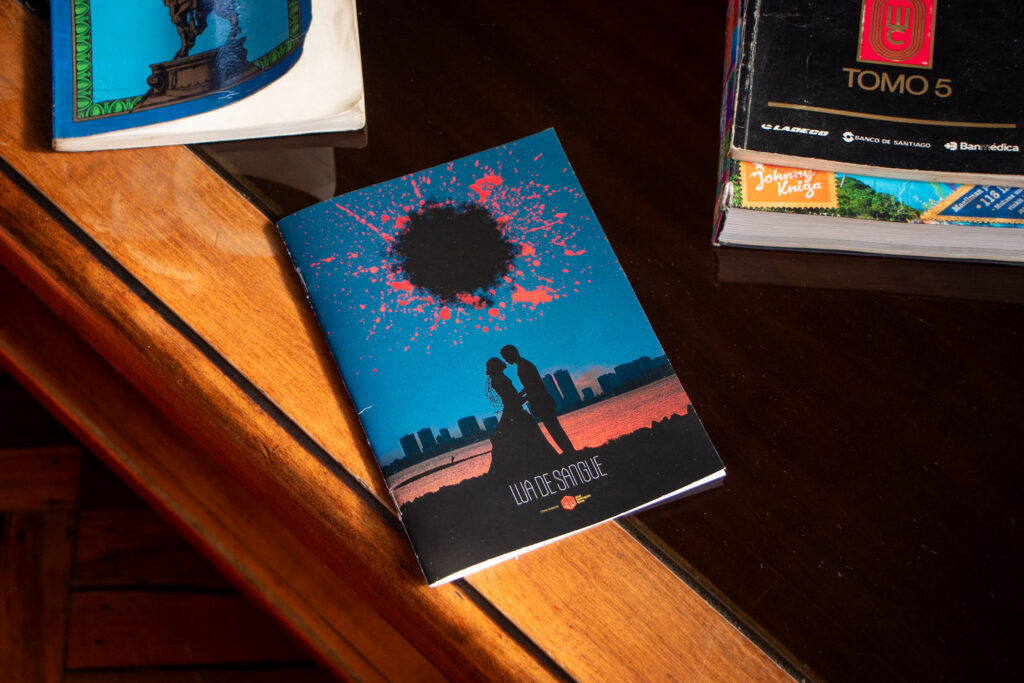
Seeking to answer this question, I decided to run a practical experiment with the screenplay of my upcoming short film. The film is still far from pre-production, but the script is already a live, published work. You can by a ebook in Portuguese here
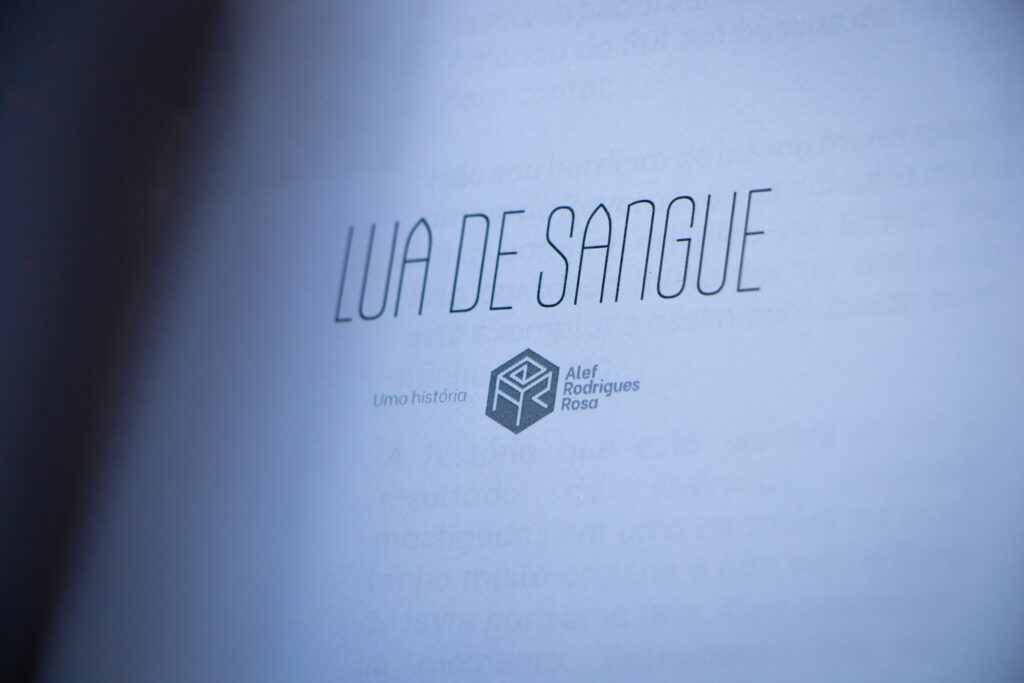
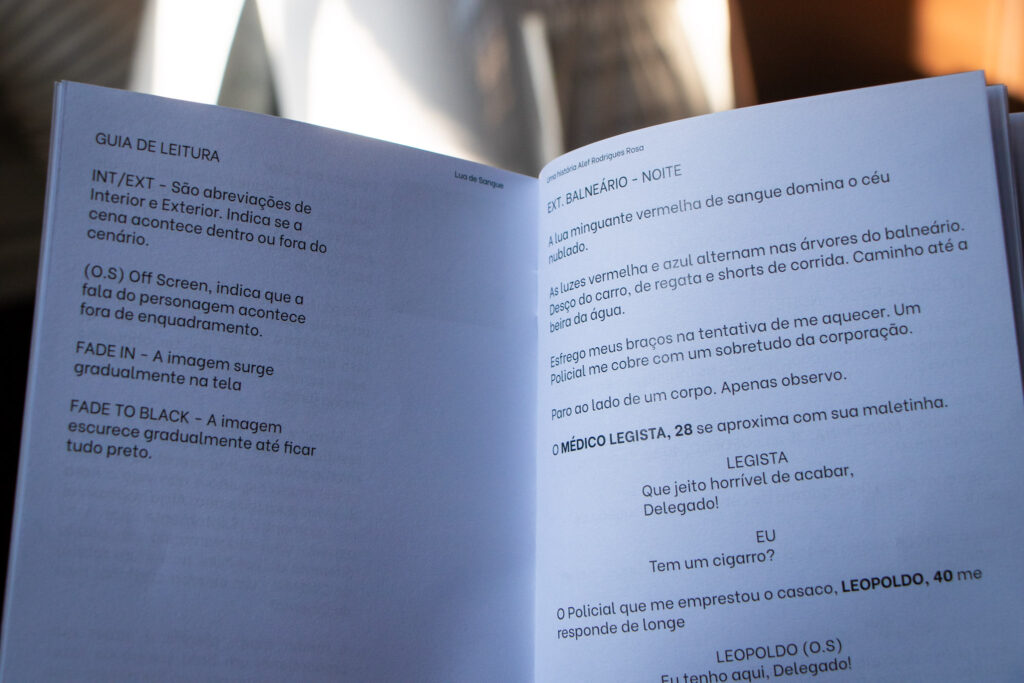
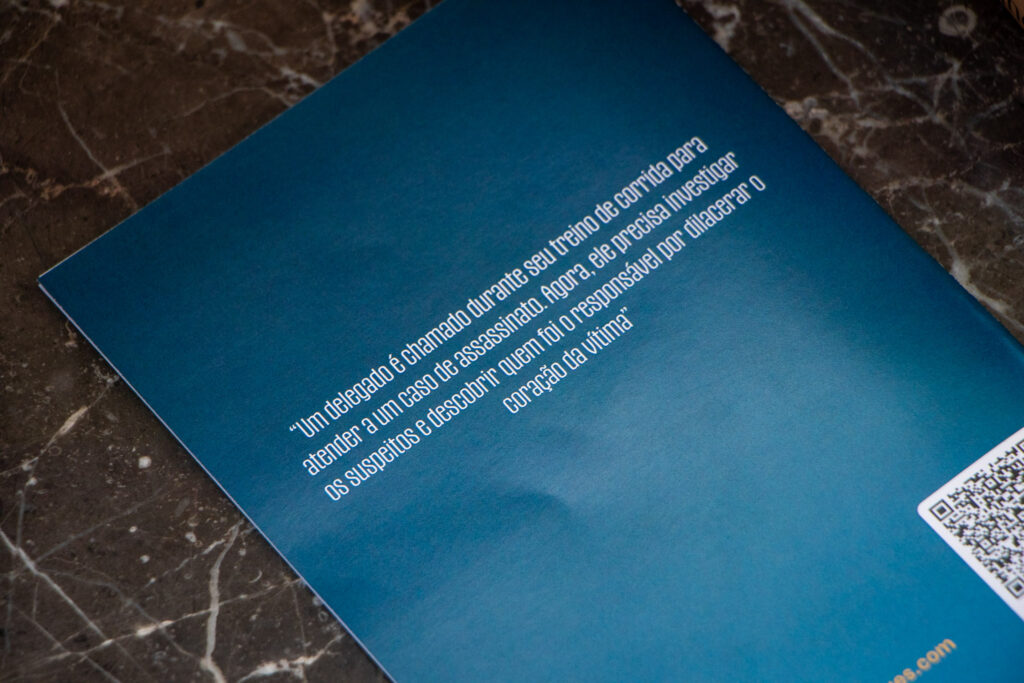
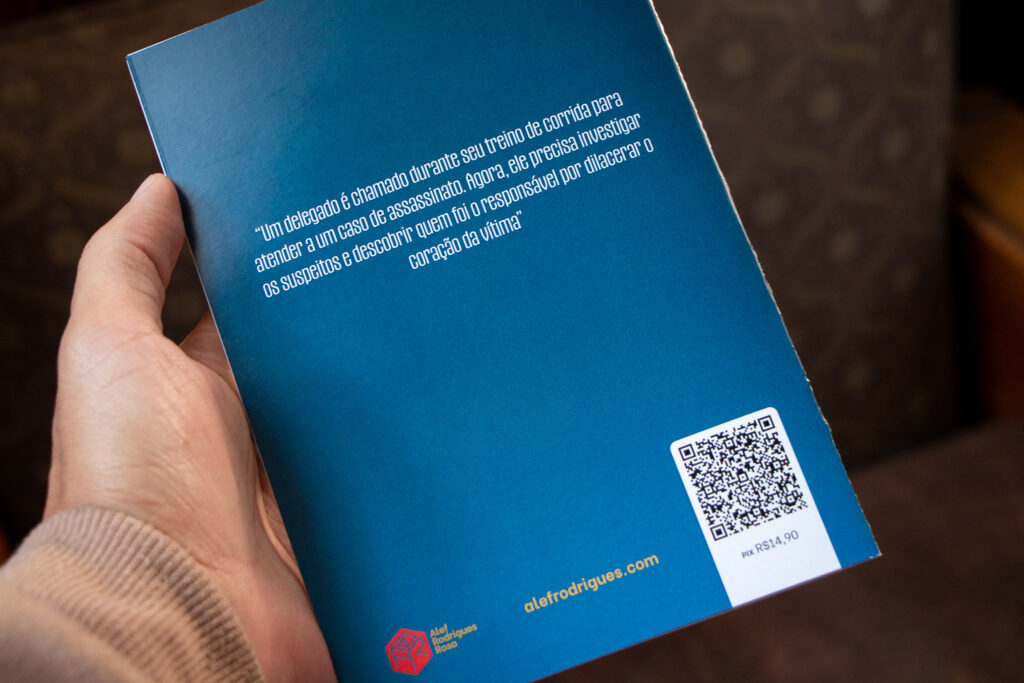
I created a hybrid format—a mix of the screenplay’s technical structure (Master Scenes, scene headings, descriptions, and dialogue) with an accessible narrative language for the general reader. This script was formatted as a livreco (a booklet in A5 or folded A4 format, roughly 5×8 inches), featuring a full-color cover and a black-and-white interior.
The test results were surprising. When presenting this material in PDF format to regular book readers during my travels, the reception was excellent. People enjoyed both the story and the experience of reading an adapted screenplay—something dynamic, visual, and distinct from a traditional novel.
The Economics of Independent Production
The main advantage of the booklet model is its extreme physical and financial viability:
- Decentralized Production: Any local print shop can print black-and-white pages for cents per sheet and produce a sturdy color cover. Finishing only requires folding and stapling.
- Low Entry Barrier: Production does not require highly specialized labor for assembly.
- Affordable Pricing for the Public: The physical material can be sold in the R$ 10 to R$ 15 range (approx. $2–$3 USD), ensuring a fair profit margin for the author while remaining extremely affordable for the consumer.
Informal Networks, Film Clubs, and the Latin American Cultural Movement
For this gear to turn in practice, we must be realistic about the South American landscape. If we try to force this micro-product into the traditional bureaucratic and tax frameworks of Brazil, a R$ 10 booklet quickly skyrockets to R$ 50 due to taxes and overhead.
Therefore, this circulation needs to stem from the vibrant informality of cultural movements, operating through direct contributions, donations, or peer-to-peer network exchanges.
The Role of Film Clubs (Cineclubes)
The ideal distribution channel for these screenplays is film clubs—spaces that already gather passionate, critical, and engaged movie lovers.
Imagine film clubs across the state of São Paulo, in rural Brazil, in Santiago, Buenos Aires, or Montevideo hosting a display shelf for independent screenplays. Readers and cinema enthusiasts can buy the booklet, read the story firsthand, directly support the author (including crowdfunding via a QR Code inside the book), and help validate the story’s impact.
Building Grassroots Momentum for Our Stories
By allowing the audience to read, critique, and consume the screenplay before the film is even shot, we reverse the traditional logic of relying on executive approvals.
We gain grassroots strength, market presence, and cultural validation. When the film finally hits the screen—whether through independent means or public funding—it will already arrive with an established readership, a community, and the certainty that the story resonates with people.
Auteur cinema doesn’t need to wait for permission from an executive boardroom to exist. It can—and should—start right now, on paper, in ink, and in the hands of the reader.