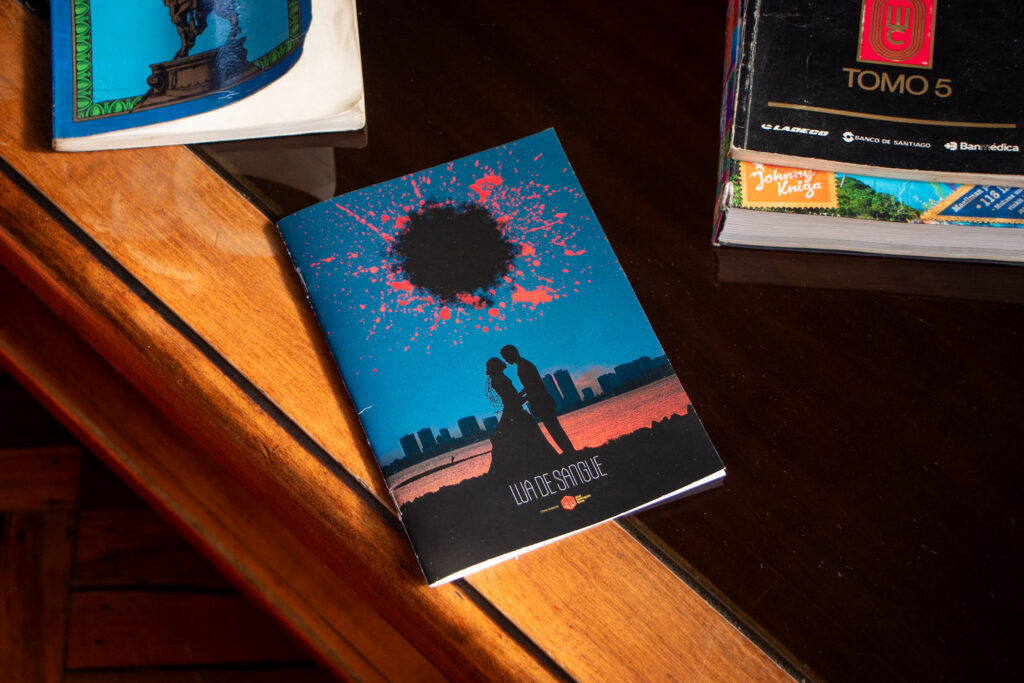
Once, a dear friend told me that we should celebrate our small achievements. With that in mind, today I reached one—very small, but deeply meaningful to me.
After a few years without writing, I finished the screenplay for my next short film, which I’ve spent the past two weeks refining.
It will be a crime drama, and both the synopsis and screenplay can be found here.
It was an intense process. Refining day after day, page after page, scene after scene—and today I made the final call. We’re ready for production.
Short Film vs Short Duration
It’s a short duration film, as I like to say.
“Short film” is a term that comes from the era of film stock, when movies were measured in meters—roll after roll of film.
With rare exceptions, as I’ve mentioned before, film stock is no longer used. That’s why I prefer to refer to duration—it’s clearer for those who aren’t familiar with the technicalities of cinema.
It makes it more practical and easier for people to understand that it’s a film with only a few minutes.
When we write screenplays, there’s a general rule that each page corresponds to one minute of screen time.
Today, I finished writing ten pages—which would translate into a ten-minute film.
Easy for you, difficult for me
I started my career working with weddings, producing video coverage for children’s parties, quinceañeras, and marriages.
Early on, I realized that my calling was to direct films—to tell my own stories—and, of course, without imagining how complicated that process would be.
Back then, I didn’t feel capable of writing even a simple story, let alone a complex one. In the end, that perception slowed down my development in audiovisual storytelling.
A feature-length film has at least 90 minutes of narrative. That’s 90 pages of an original story. For you, it might seem simple—for me, it felt almost impossible. And it still feels a bit distant.
On top of that, I’ve always been more visual. I’ve always been much more stimulated by images than by sounds or words.
Translating what emerges as images and sensations in my mind into words—to build a story on a page—has always been very difficult.
Even today, when I read, I retain more of the essence than the exact words.
Rap and poetry have always been challenging for me.
The power of habit
A few years ago, I read a book called The Power of Habit, which explains how our minds work when it comes to habits—and how to shape them in your favor.
To build a new habit, you need to force yourself to do something new for about three months. The question is: how do you develop that discipline?
The answer is a major goal—a target that is almost difficult to reach, but strong enough to make you change your entire routine, to direct your life toward achieving it. In the process, you develop new habits.
My North Star
When I read that three years ago, I set a goal: I would release a feature-length film. That decision changed my entire behavior.
I started reading more, bought a pocket notebook to write down stories I heard from friends, and became more disciplined to reach that goal.
The process was much more complicated than I expected. I studied other areas of cinema—especially the market—because I wanted to make money with my films. I even developed a business plan.
Today, I managed to write a complex, dense ten-page story. It feels like a cycle closing—moving me closer to my goals.